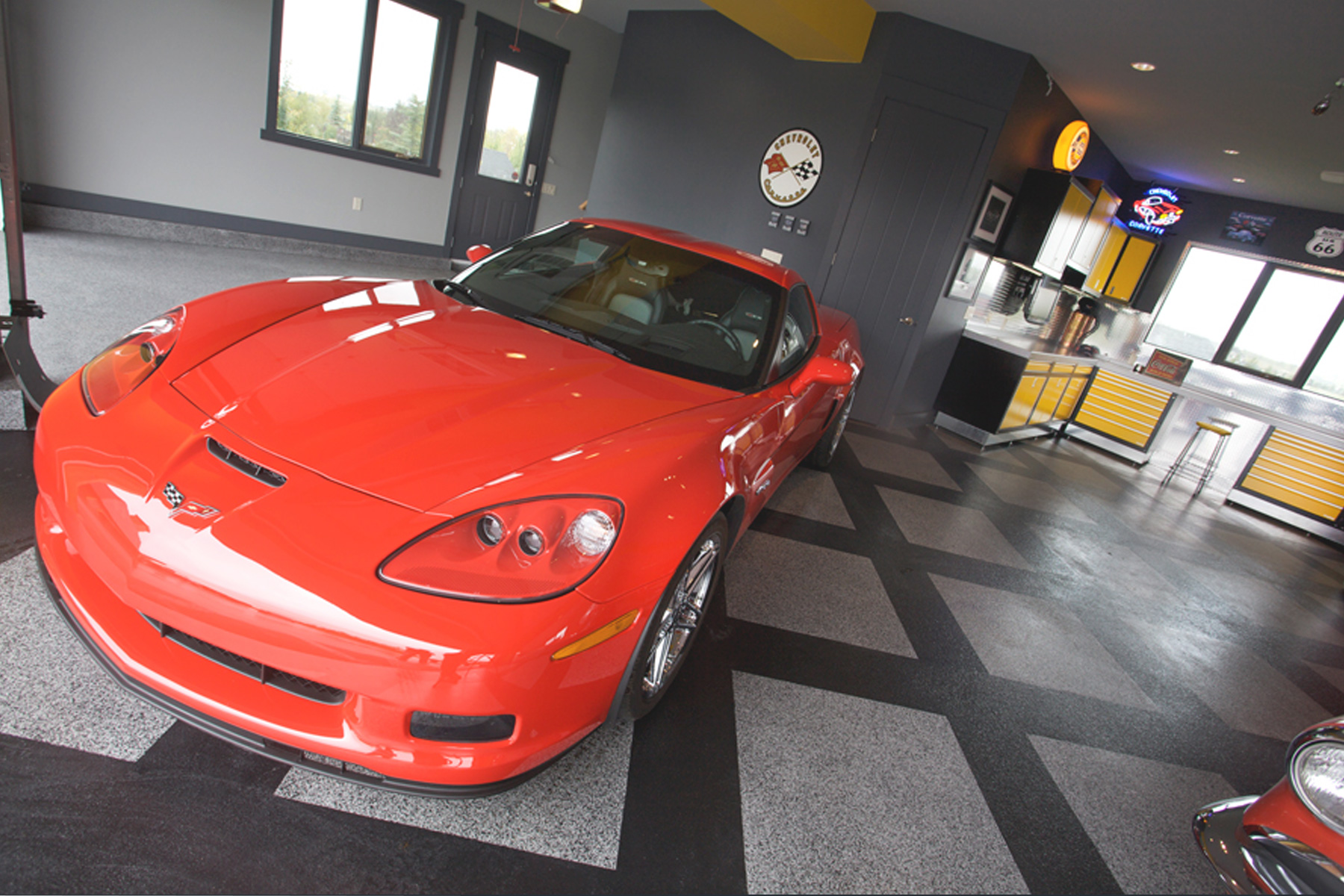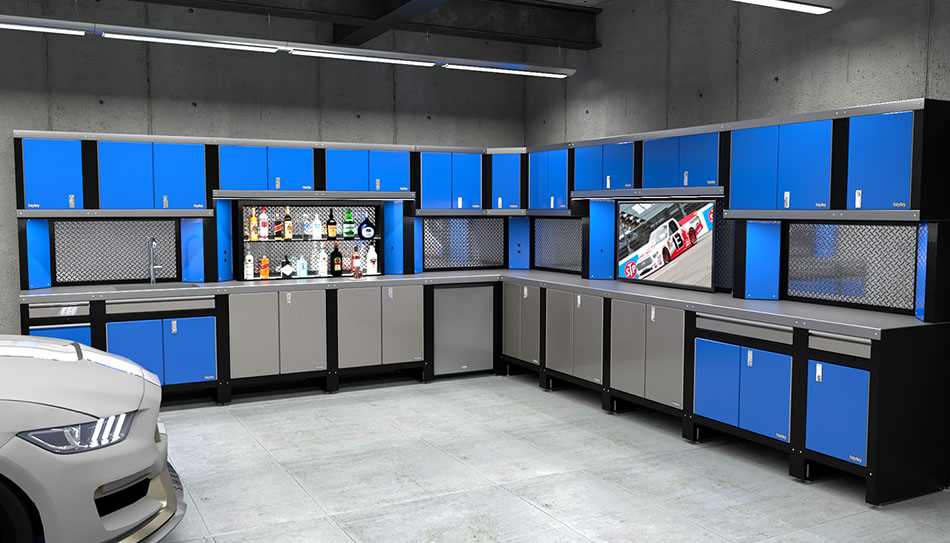
The best metal garage cabinets are not identified by steel gauge alone. A high-quality cabinet system combines suitable steel thickness, rigid construction, well-supported doors and drawers, dependable hinges and slides, a properly prepared powder-coated finish, practical dimensions, secure installation, and a warranty backed by a reliable supplier.
For most homeowners, the goal is not to buy the heaviest cabinet available. It is to choose a system that stays square, opens smoothly, carries the intended load, resists everyday garage wear, fits around vehicles and doors, and can be expanded or serviced later.
This guide explains what to inspect before buying metal garage cabinets for a home garage, workshop, or commercial space. To compare complete systems available locally, explore The Garage Store’s garage cabinets in Calgary or request a free on-site consultation and quote.
Metal Garage Cabinet Quality Checklist
| What to inspect | Why it matters | What to ask |
|---|---|---|
| Steel gauge and component thickness | Affects stiffness, dent resistance, and how solid the cabinet feels | Which parts are made from the stated gauge: cabinet body, doors, drawers, shelves, or countertop? |
| Cabinet construction | Welds, bends, reinforcements, and assembly methods affect rigidity | Is the cabinet fully welded, factory assembled, or assembled on site? |
| Doors and drawers | These moving components receive the most daily use | Are doors double-sided or reinforced? What are the drawer and shelf load ratings? |
| Hinges and drawer slides | Good hardware helps doors remain aligned and drawers operate smoothly | Are the slides full-extension? Are replacement parts available? |
| Powder coating and pretreatment | Preparation and curing influence adhesion, appearance, and corrosion resistance | How is the steel cleaned and treated before coating? Are interiors, edges, and bends fully covered? |
| Fit and installation | A strong cabinet can still perform poorly if it is undersized, unlevel, or badly anchored | Who measures, designs, levels, anchors, and installs the system? |
| Warranty and support | Clear coverage and accessible service matter if hardware or components need attention | What is covered, for how long, and who handles a claim? |
1. Understand Steel Gauge Before Comparing Cabinets
Steel gauge describes sheet thickness. Within the same gauge system, a lower gauge number generally means thicker steel. A 16-gauge component is therefore thicker than an 18-gauge component, and both are thicker than many light-duty 20- or 24-gauge components.
Gauge is useful, but it is only one part of cabinet quality. Ask where the advertised gauge is actually used. A product may promote the thickness of its countertop or door while using a different thickness for the cabinet body, shelves, or drawers.
Also consider how each component is shaped and reinforced. Strategic bends, double-sided doors, welded seams, shelf supports, and internal bracing can improve rigidity without making every part from the thickest possible sheet.
Is 16-gauge steel always better than 18-gauge steel?
Sixteen-gauge steel is thicker, but that does not automatically make every 16-gauge cabinet a better system than every 18-gauge cabinet. Construction, dimensions, hardware, load ratings, finish, and installation still matter.
For example, The Garage Store’s current Hayley HC and Hayley HR cabinets use 16-gauge steel and double-sided doors. Proslat Fusion PLUS cabinets use 18-gauge steel with fully welded construction. These are different cabinet systems, and each should be assessed as a complete product rather than judged from one number.
2. Look Beyond the Label “Steel Cabinet”
Metal grade, sheet consistency, fabrication, and cabinet design all affect the finished product. Cold-rolled sheet steel is commonly used for cabinet components because it can provide a smooth surface and consistent dimensions for bending and finishing. However, the words “cold rolled” alone do not establish strength, load capacity, or overall quality.
Inspect the actual cabinet or a showroom model. Look for:
- Straight, clean bends
- Square cabinet boxes
- Doors that align evenly
- Consistent gaps around drawers and doors
- Smooth edges without sharp exposed metal
- Welds or fasteners appropriate for the cabinet design
- Reinforcement where hardware and shelves carry weight
- A solid feel when doors and drawers are opened and closed
A cabinet should not rack, twist, or wobble during normal use. If a tall cabinet feels unstable in a showroom, adding tools and supplies will not solve the problem.
3. Compare Fully Welded, Factory-Assembled, and Modular Construction
Fully welded cabinets arrive as rigid boxes with major seams permanently joined. This can provide excellent alignment and reduce on-site assembly. Factory-assembled or modular systems can also perform well when they use adequate steel, strong fasteners, reinforced connection points, and professional installation.
Do not assume that every welded cabinet is automatically premium or that every assembled cabinet is weak. Instead, check:
- Whether the cabinet stays square under use
- How corners and seams are reinforced
- Whether doors remain aligned when the cabinet is loaded
- How wall cabinets and tall cabinets are anchored
- Whether modular sections can be expanded later
- Whether damaged hardware or individual components can be replaced
Modularity can be valuable when storage needs may change. It allows homeowners to begin with a practical cabinet run and add upper cabinets, tall lockers, drawers, or accessories later, provided the product line remains available.
4. Inspect Doors, Drawers, Hinges, and Slides
Doors and drawers reveal cabinet quality quickly because they are handled repeatedly. Open and close every component on a showroom model rather than relying only on photos.
Doors
High-quality doors may use double-sided construction, folded edges, or internal reinforcement to reduce flexing. Check whether the door remains flat, closes evenly, and resists twisting when opened.
Hinges
Full-length piano hinges can distribute movement along the height of a door. Adjustable European-style hinges can make alignment and servicing easier. Either design can work well when it is properly matched to the door size and weight.
Drawer slides
Full-extension slides make it easier to reach items at the back of a drawer. Ask for the manufacturer’s stated load rating rather than accepting a vague description such as “heavy duty.” Test whether a drawer moves smoothly, remains level, and closes consistently.
Shelves
Shelves should be supported in a way that suits their span and expected load. Long shelves can flex even when the surrounding cabinet is strong. Ask about load ratings, adjustment points, and replacement or additional shelves.
5. Evaluate the Powder-Coated Finish and the Preparation Beneath It
Powder coating is more than a colour choice. The steel should be cleaned and prepared before powder is applied and cured. The Powder Coating Institute defines pretreatment as preparation performed before coating to improve adhesion and corrosion resistance.
Review the Powder Coating Institute glossary.
When comparing metal garage cabinets, inspect the finish for:
- Even coverage across doors, sides, interiors, bends, and edges
- No visible bare steel, bubbling, flaking, or thin patches
- Consistent texture and colour
- Clean coverage around welds, seams, and hardware openings
- No cracking or damage at formed corners
Ask the supplier what cleaning or conversion treatment is used before coating and whether the finish is applied before or after the main fabrication steps. A thick-looking finish is not enough if contamination, inadequate preparation, or poor curing prevents it from bonding properly.
A textured finish can help disguise fingerprints and minor marks, while a smoother finish may be easier to wipe. The better choice depends on the intended appearance and use.
6. Consider Moisture, Road Salt, and Calgary Garage Conditions
Calgary garages can experience condensation, melting snow, road salt, dust, and large seasonal temperature changes. Powder-coated steel is well suited to many garages, but it should not be described as completely immune to corrosion. Scratches, exposed edges, standing water, and long-term salt residue can still affect metal.
Good design and maintenance can reduce those risks:
- Use wall-mounted cabinets, adjustable legs, or suitable bases where water may collect.
- Keep the bottom edges out of persistent snowmelt.
- Wipe up salt residue and chemical spills.
- Repair deep scratches that expose bare steel.
- Avoid placing wet items in closed cabinets without allowing them to dry.
- Confirm whether the cabinet finish is intended for the actual environment.
If the garage regularly floods or has serious moisture problems, address the water source before investing in cabinetry.
7. Choose Cabinet Dimensions Around the Garage, Not a Catalogue Photo
The best metal cabinets are only useful when the layout works. Measurements should account for more than the empty wall.
A cabinet plan should consider:
- Vehicle width and door-opening clearance
- Garage doors, tracks, openers, and wall controls
- Windows, man doors, electrical panels, outlets, and switches
- Floor slope, curbs, foundation ledges, and uneven walls
- Items that need to be stored and how often they are used
- Clearance for drawers, cabinet doors, and tall lockers
- Whether future modules, lighting, or power should be added
- How upper cabinets and tall units will be anchored
A professional layout can combine lower cabinets, upper cabinets, tall storage cabinets, rolling units, tool drawers, and open work surfaces without interfering with parking or access.
8. Match the Cabinet System to What You Will Store
A homeowner storing seasonal supplies does not need the same cabinet system as a serious workshop or commercial facility. Before comparing prices, list the heaviest and largest items that need a home.
For general residential storage
Priorities may include adjustable shelves, enclosed storage, easy-to-clean finishes, locks, and a layout that keeps household and recreational items off the floor.
For tools and workshop use
Focus more closely on drawer-slide ratings, shelf capacity, work-surface options, power integration, task lighting, and resistance to impacts or common workshop chemicals.
For commercial or specialized environments
The cabinet specification may need to account for unusually heavy loads, chemical exposure, security, facility standards, or custom counters. The Garage Store has previously supplied custom 14-gauge steel cabinetry for a ConocoPhillips water-testing laboratory, where the design included project-specific resistance and countertop requirements.
Standard garage cabinets should not be assumed to meet specialized fire, chemical, laboratory, or hazardous-material standards unless the exact cabinet and installation are documented for that use.
9. Review the Warranty, Replacement Parts, and Installer
A long warranty can be reassuring, but the details matter. Read what it covers and whether it applies to the cabinet structure, finish, hinges, slides, locks, work surfaces, labour, or installation.
Ask these questions before purchasing:
- Who handles a warranty claim?
- Are hinges, slides, handles, locks, and shelves replaceable?
- Is the warranty transferable?
- Are damage, overloading, corrosion, or commercial use excluded?
- Does professional installation affect coverage?
- Will the product line and finish still be available if the system is expanded?
The installer also matters. Accurate measurement, levelling, anchoring, alignment, and adjustment are necessary for a cabinet system to perform as intended.
Warning Signs of Low-Quality Metal Garage Cabinets
Low price does not automatically mean low quality, but these signs deserve closer inspection:
- The supplier cannot explain which components use the advertised steel gauge.
- Doors visibly flex, twist, or sit unevenly.
- Drawers bind, sag, or do not extend fully.
- Shelf and drawer load ratings are unavailable.
- Cabinet boxes rack or wobble under light pressure.
- Welds, bends, seams, or edges look inconsistent.
- Powder coating is chipped, thin, cracked, or missing around edges.
- Replacement hardware is unavailable.
- The warranty is vague or handled by an inaccessible third party.
- The quote excludes measurement, delivery, anchoring, or final adjustment.
Whenever possible, compare cabinets in person. Photos do not show drawer movement, door rigidity, cabinet alignment, weld quality, or the feel of the hardware.
Metal Garage Cabinets Available in Calgary
The Garage Store designs and installs several cabinet systems rather than treating one material or price point as right for every garage. Current metal options include 16-gauge Hayley cabinet systems and fully welded 18-gauge Proslat Fusion PLUS cabinets. The wider cabinet selection also includes nonmetal systems for homeowners whose priorities, style, or budget point in another direction.
For a broader material comparison, read The 7 Best Materials for Garage Cabinets in Calgary.
How to Compare Metal Garage Cabinet Quotes
Ask each supplier to provide enough detail to compare complete systems rather than total prices alone. A useful quote should identify:
- Cabinet brand and product line
- Exact layout, dimensions, and components
- Steel gauge used in the body, doors, drawers, shelves, and work surface
- Fully welded, factory-assembled, or modular construction
- Hinges, drawer slides, locks, and stated load ratings
- Powder-coat finish and available colours
- Countertop, backsplash, lighting, and power options
- Delivery and installation
- Wall anchoring, levelling, and final adjustment
- Warranty terms and service responsibility
A lower quote may reflect a smaller cabinet volume, lighter hardware, fewer drawers, thinner components, a different work surface, or installation exclusions. Comparing line by line helps reveal the actual difference.
How to Choose the Best Metal Garage Cabinets
The best metal garage cabinets are the ones that match the space and intended use while providing dependable construction, hardware, finish, installation, and support. Steel gauge matters, but it should be considered alongside the complete cabinet design.
Before buying, inspect a real display, open every door and drawer, ask for component specifications and load ratings, review the powder-coating process, and confirm how the system will be measured and installed.
To compare metal and other cabinet systems for your space, visit The Garage Store’s Calgary garage cabinet showroom and service page. When you are ready for a layout and quote, book a free on-site consultation.
Frequently Asked Questions
What gauge steel is best for garage cabinets?
There is no single best gauge for every cabinet. Sixteen- and 18-gauge steel are both used in high-quality garage cabinet systems. Compare which components use that gauge, how the cabinet is reinforced, the door and drawer construction, hardware, load ratings, finish, and installation.
Is 16-gauge steel stronger than 18-gauge steel?
Sixteen-gauge sheet steel is thicker than 18-gauge sheet steel within the same gauge standard. However, cabinet strength also depends on the steel grade, dimensions, bends, reinforcement, welds, hardware, and overall design.
Are fully welded garage cabinets better?
Fully welded cabinets can offer excellent rigidity and factory alignment. Well-designed modular or assembled cabinets can also perform reliably when they use strong components, reinforced connections, and professional installation. Compare the complete construction rather than relying on one label.
Will powder-coated steel garage cabinets rust?
A properly prepared and cured powder-coated finish helps protect steel, but it does not make the cabinet immune to corrosion. Deep scratches, exposed edges, salt, standing water, and persistent moisture can still affect the metal. Keep cabinets dry and repair damage that exposes bare steel.
Are metal garage cabinets better than MDF cabinets?
Metal is often preferred for strength, impact resistance, and a modern industrial appearance. Powder-coated MDF can provide extensive customization and strong value for many residential garages. The better material depends on the load, environment, style, configuration, and budget.
How much do metal garage cabinets cost?
Cost depends on the cabinet brand, steel construction, number and size of cabinets, drawers, work surfaces, hardware, finish, accessories, delivery, and installation. A measured layout is needed for an accurate comparison and quote.