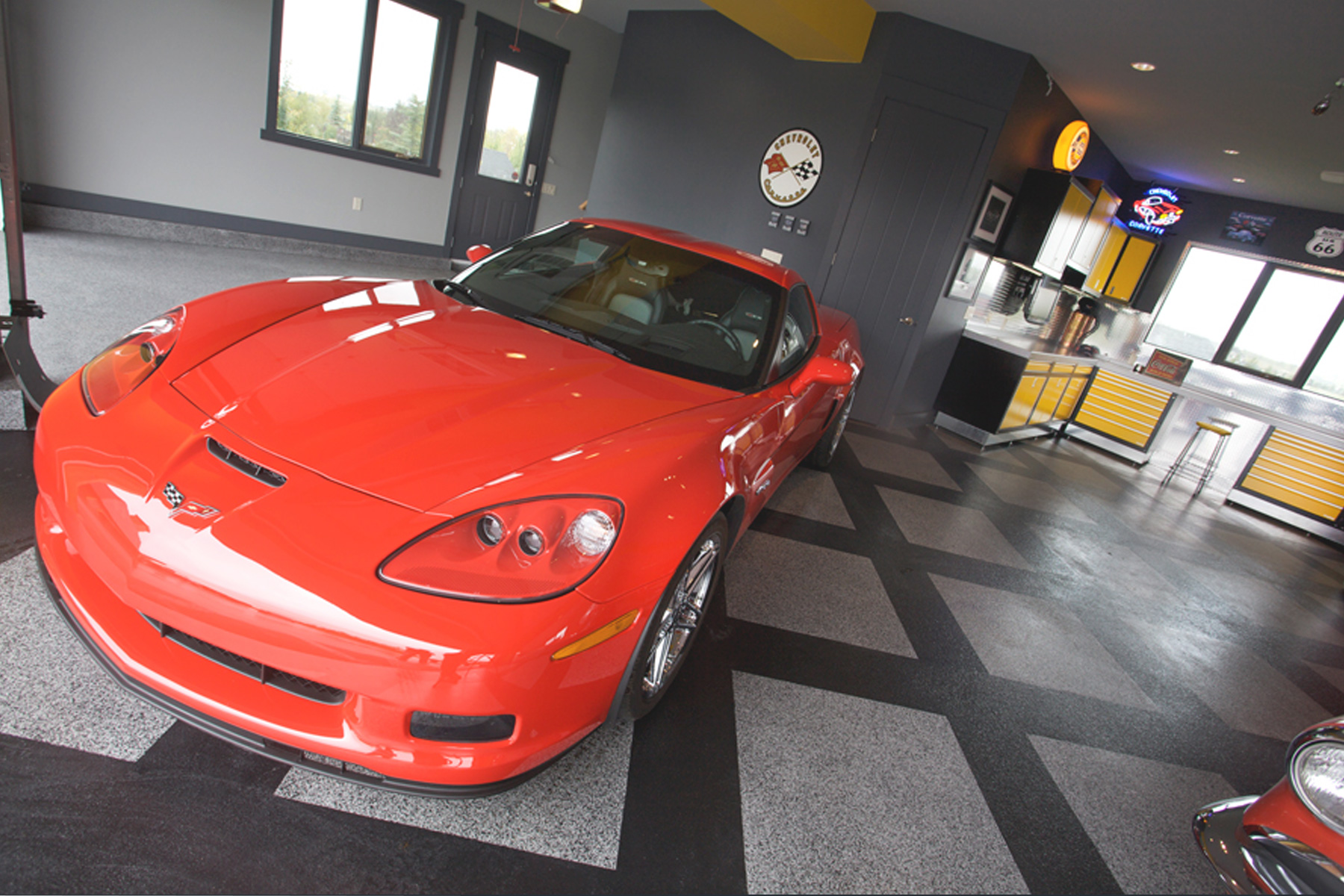
For most Calgary homes, a professionally installed polyaspartic or polyaspartic-dominant coating system is one of the strongest all-around choices for a garage floor. It can provide fast curing, strong UV stability, customizable traction, and durable protection against daily vehicle traffic, salt, slush, and common automotive fluids. Epoxy can also be an excellent option in the right system, especially when a thicker build, longer working time, or specialized chemical resistance is required.
The best garage floor coating is not determined by one product name alone. The condition of the concrete, surface preparation, resin chemistry, number of coats, finish, traction level, and quality of installation all affect how the floor performs.
If you are ready to compare systems for your own space, explore The Garage Store’s garage flooring options in Calgary or request a free on-site consultation.
Why Calgary Garages Need the Right Floor Coating
Calgary garage floors deal with conditions that can be hard on bare concrete and poorly installed coatings. Vehicles carry melting snow, road salt, sand, gravel, and moisture into the garage throughout winter. Chinooks and rapid temperature changes can also expose the slab and coating system to repeated expansion, contraction, and moisture.
A suitable coating system can make the floor easier to clean while helping protect the concrete from staining, abrasion, moisture, and chemical exposure. The coating still needs to be selected and installed for the actual slab and how the space will be used.
Important performance factors for Calgary homes
- Adhesion: The coating needs a properly prepared concrete surface so it can bond reliably.
- Moisture management: Existing moisture issues, cracks, and damaged concrete should be evaluated before coating.
- Salt and chemical resistance: The system should tolerate the contaminants commonly brought in by vehicles.
- Abrasion resistance: Sand, gravel, tires, tools, and regular traffic can wear a weak finish.
- UV stability: Sunlight near garage doors and windows can affect the colour of some coatings.
- Traction: Texture should be selected with wet winter conditions and cleaning requirements in mind.
- Return-to-service time: Some systems cure faster than others, which affects how long the garage is unavailable.
Coating Chemistry and Floor Finish Are Not the Same Thing
Garage flooring terminology can be confusing because resin types and decorative finishes are often discussed as though they are interchangeable.
Epoxy, polyaspartic, polyurea, polyurethane, and acrylic are resin chemistries. Vinyl-chip, quartz, metallic, and solid-colour floors describe the appearance or construction of a system. For example, a decorative vinyl-chip floor may use an epoxy base coat, a polyaspartic base coat, or a hybrid combination, depending on the system selected.
This distinction matters because two floors that look similar can perform differently based on the resin, preparation, coat thickness, aggregate, topcoat, and installation process.
Garage Floor Coating Options Compared
| Option | Main strengths | Considerations | Often suited to |
|---|---|---|---|
| Polyaspartic | Fast curing, strong abrasion resistance, UV-stable options, customizable colour and traction | Short working time requires an experienced installer; slab defects need careful repair | Daily-use residential garages, decorative chip systems, solid-colour floors, commercial spaces |
| Epoxy | Thicker build, long working time, many specialized formulations, strong chemical resistance in suitable systems | Many epoxies cure more slowly and can yellow with UV exposure; installation conditions and preparation are critical | Residential, commercial, and industrial systems where epoxy’s specific properties are beneficial |
| Polyurethane or urethane | Abrasion resistance, flexibility, chemical-resistant and waterproofing options | Often used as one part of a multi-layer system; product properties and costs vary widely | Commercial, industrial, parkade, food-processing, and specialized environments |
| Acrylic or MMA | Fast-curing options and specialized cold-temperature applications | Short working time, odour, and specialized handling can limit suitability for a typical residential garage | Specialized commercial projects where rapid curing is a priority |
| Concrete sealer | Lower-cost basic protection while retaining a natural concrete appearance | Not equivalent to a full resinous coating system and generally provides less decorative and wear protection | Lower-demand spaces and owners who prefer the look of concrete |
| Interlocking tile | Replaceable sections, many colours and patterns, no bonded coating required | Not a seamless coating; water and debris management beneath the tile should be considered | Homeowners who want a modular or reversible flooring option |
Is Polyaspartic the Best Garage Floor Coating for Calgary?
For many Calgary homeowners, polyaspartic is the strongest all-around choice. Polyaspartic is a type of polyurea that is commonly used in fast-curing, high-performance floor systems. Many aliphatic polyaspartic products provide excellent UV stability, which helps reduce yellowing near an open garage door or window.
Polyaspartic systems can also be formulated for strong resistance to abrasion, road salt, automotive fluids, and daily vehicle traffic. Their faster cure can shorten project downtime compared with many conventional epoxy systems.
That does not mean every product labelled polyaspartic is automatically better. The coating still needs the correct preparation, film build, number of coats, texture, and installation conditions. A properly designed epoxy or hybrid system can outperform a poorly prepared polyaspartic floor.
For a more focused comparison, read epoxy vs polyaspartic garage floors in Calgary.
When Epoxy Is Still a Good Garage Flooring Option
Epoxy remains an important floor-coating material. It is available in many formulations and can provide a thick, attractive, chemically resistant surface when the product is matched to the environment and installed correctly.
Epoxy’s longer working time can help installers build certain decorative or high-build systems. Specialized epoxies are also used in demanding commercial and industrial applications where specific chemical or wear resistance is required.
The limitations depend on the formulation. Many traditional epoxies cure more slowly than polyaspartic coatings and are more sensitive to installation temperature. Epoxy can also discolour with UV exposure if it is not protected by a suitable UV-stable topcoat. Proper mechanical preparation is essential because weak adhesion, moisture, or contamination can cause bubbling, peeling, or hot-tire pickup.
The right question is not simply whether epoxy is good or bad. It is whether the proposed epoxy system is appropriate for the slab, the garage, the climate, and the expected use.
What About Polyurethane and Acrylic Coatings?
Polyurethane and urethane systems
Polyurethane coatings can offer valuable flexibility, abrasion resistance, and chemical resistance. Some are used as durable topcoats over other resin systems. Elastomeric urethanes and urethane-cement systems are more specialized and may be selected for waterproofing, thermal shock, food-processing, parkade, or heavy industrial requirements.
These systems are not usually the first option a homeowner needs to compare for a standard residential garage, but they remain important when the project has unusual performance requirements. Our separate guide to epoxy vs polyurethane garage floor coatings explains the differences in more detail.
Acrylic and MMA coatings
Acrylic sealers and paints are often used for lighter-duty concrete protection. Methyl methacrylate, commonly called MMA, is a more specialized fast-curing acrylic system. MMA can be useful where rapid return to service or cold-temperature curing is required, but its short working time, strong odour, and specialized application make it less common for a typical residential garage.
Popular Garage Floor Systems and Finishes
Vinyl-chip floor coatings
A vinyl-chip floor coating uses decorative chips broadcast into a resin layer and sealed with a clear topcoat. The chips create colour variation, help disguise minor dirt, and can contribute texture. The Garage Store offers vinyl-chip systems for residential garages and commercial spaces using epoxy, polyaspartic, hybrid, or solid-colour configurations.
Solid-colour polyaspartic coatings
A solid-colour concrete coating system creates a clean, uniform finish without decorative flakes. Full-polyaspartic solid-colour systems can be a strong choice for garages, shops, aviation spaces, warehouses, and other areas where a seamless, easy-to-clean floor is preferred.
Quartz concrete coatings
Quartz concrete coatings combine resin with coloured quartz aggregate. The aggregate can provide increased texture and durability, making quartz systems especially useful for high-traffic or traction-sensitive areas such as parkades, service bays, locker rooms, walkways, and commercial entrances.
Metallic floor coatings
Metallic floor coatings create a decorative, high-end appearance with depth and movement. They can be appropriate for show garages, retail spaces, car dealerships, and other environments where visual impact is a major priority.
Interlocking garage floor tiles
Interlocking tiles, including SwissTrax garage floor tiles, are an alternative to a bonded coating. They can provide a quick visual transformation and individual tiles can be replaced if damaged. Homeowners should still consider drainage, cleaning below the tiles, chemical exposure, and how the floor will be used. Our epoxy vs tile garage flooring comparison explores this choice in greater detail.
What Is the Best Coating for a Commercial Concrete Floor?
Commercial and industrial floors should be specified around the work performed in the space. A retail showroom, hotel parkade, auto-service bay, warehouse, commercial kitchen, and manufacturing facility do not have the same requirements.
Depending on the project, the best system may involve polyaspartic, epoxy, polyurethane, urethane cement, quartz aggregate, or a combination of materials. Important factors can include:
- Vehicle, forklift, or pedestrian traffic
- Impact and abrasion
- Chemical or oil exposure
- Thermal shock and temperature changes
- Waterproofing or moisture control
- Traction and cleaning requirements
- Allowable downtime
- Colour, branding, and appearance
The Garage Store provides industrial and commercial floor-coating systems in Calgary for spaces such as auto-service facilities, aviation hangars, manufacturing areas, warehouses, laboratories, and other demanding environments.
How to Choose the Best Garage Floor Coating for Your Space
1. Start with the condition of the concrete
Cracks, pitting, contamination, previous coatings, moisture, and weak surface concrete can all change the installation plan. A site assessment helps determine whether the slab needs grinding, repairs, removal of an old coating, or additional moisture evaluation before a new system is installed.
2. Consider how the garage is used
A garage used only for parking has different needs from a workshop, home gym, hobby area, show garage, or commercial service bay. Heavy equipment, welding, dropped tools, chemicals, studded tires, and frequent vehicle traffic may require a more specialized system.
3. Decide how much texture you need
More texture can improve traction, but it can also change how the floor feels and how easily it is cleaned. The best balance depends on the amount of water entering the garage, who uses the space, and the desired appearance.
4. Compare downtime, not just cure time
Fast-curing coatings can reduce the time a garage or business is out of service. However, the full schedule also includes preparation, repairs, coating application, and the manufacturer’s required cure before foot or vehicle traffic returns.
5. Compare the complete system, not just the resin name
Ask what preparation is included, how cracks will be treated, how many coats will be applied, what resin is used in each layer, what traction level is planned, and what conditions must be maintained during installation. These details are often more meaningful than a generic label such as epoxy or polyaspartic.
Why Surface Preparation Matters So Much
A premium coating cannot compensate for poor surface preparation. The concrete must be clean, sound, and profiled so the coating can bond. Depending on the slab, professional preparation may include:
- Mechanical grinding or removal of an existing coating
- Cleaning oil, grease, and other contaminants
- Repairing cracks, spalls, holes, and damaged edges
- Evaluating moisture where conditions indicate it may be necessary
- Preparing the garage apron, perimeter, and transitions
- Vacuuming dust before the coating layers are applied
Skipping preparation can lead to peeling, bubbling, weak adhesion, visible defects, or premature wear regardless of the coating brand.
How Much Does Garage Floor Coating Cost in Calgary?
Garage floor coating prices vary because every slab and system is different. The main cost factors include:
- Floor area and layout
- Condition and age of the concrete
- Crack, pit, and surface repairs
- Removal of paint or an existing coating
- Moisture or contamination concerns
- Epoxy, polyaspartic, quartz, metallic, or other system selected
- Number of coats and amount of aggregate or decorative chip
- Traction, colour, and finish requirements
- Residential or commercial performance needs
A site visit is the most reliable way to price the work because it allows the installer to inspect the concrete and recommend a system rather than quoting from square footage alone. The Garage Store offers a free on-site consultation for flooring projects.
Maintaining a Coated Garage Floor in Calgary
Regular maintenance helps any coating perform and look its best. Sweep or vacuum sand and gravel before it acts like an abrasive, remove salt and slush buildup, clean spills promptly, and follow the installer or coating manufacturer’s cleaner recommendations. Avoid assuming that stronger chemicals always clean better, as unsuitable products can dull or damage some finishes.
For a full seasonal routine, read our guide to maintaining epoxy and polyaspartic garage floors through Calgary winters.
What Is the Best Garage Floor Coating for Calgary Homes?
For a typical Calgary residential garage, a professionally prepared polyaspartic or polyaspartic-dominant multi-coat system is often the best overall choice. It can provide the UV stability, cure speed, durability, traction options, and low-maintenance finish that homeowners want in a garage exposed to snow, slush, salt, and daily vehicles.
Epoxy remains a valuable option and may be preferred in specific high-build, decorative, chemical-resistant, or commercial systems. Quartz, solid-colour, vinyl-chip, metallic, polyurethane, and industrial systems each have situations where they make more sense than a standard decorative garage floor.
The best decision comes from matching the full system to the slab, environment, appearance, budget, and expected use.
Request a Garage Floor Coating Quote
The Garage Store helps homeowners and businesses compare concrete coating systems based on the actual condition and use of the space. Learn more about garage flooring in Calgary, then book a free consultation to receive a recommendation and quote.
Flooring service is also available through dedicated local pages for Airdrie, Chestermere, Cochrane, and Okotoks.
Frequently Asked Questions
What is the best garage floor coating for Calgary winters?
For many Calgary homes, a professionally installed polyaspartic or polyaspartic-dominant system is the best all-around option. It can offer strong resistance to abrasion, UV exposure, salt, slush, and daily vehicle traffic. The final choice should still reflect the slab condition, garage use, desired finish, and budget.
Is polyaspartic better than epoxy for a garage floor?
Polyaspartic often offers faster curing and better UV stability than traditional epoxy, which can make it a strong choice for residential garages. Epoxy provides advantages in other systems, including thicker builds, longer working time, and specialized chemical resistance. Installation quality and the complete coating design matter more than the product name alone.
Can a garage floor coating be installed during winter?
Some polyaspartic and specialized coating systems can be applied in cooler conditions, but the concrete temperature, moisture, ventilation, and product requirements still need to be controlled. The installer should confirm that conditions are suitable before proceeding.
How long does a garage floor coating last?
There is no single lifespan for every coating. Longevity depends on the resin system, surface preparation, slab condition, traffic, chemical exposure, maintenance, and installation quality. A professionally installed high-performance system can provide many years of service when it is matched to the space and properly maintained.
How much does a garage floor coating cost in Calgary?
Cost depends on the floor area, slab condition, repairs, coating removal, moisture concerns, chosen system, number of coats, traction, and finish. An on-site assessment is the best way to receive an accurate quote.
What is the best floor coating for a commercial garage or shop?
The best commercial system depends on traffic, impact, chemicals, thermal shock, waterproofing, traction, cleaning, appearance, and allowable downtime. Polyaspartic, epoxy, polyurethane, urethane cement, vinyl-chip, quartz, and other industrial systems may be used alone or in combination.
How should I clean a polyaspartic or epoxy garage floor?
Remove sand, gravel, salt, and slush regularly, clean spills promptly, and use a cleaner approved for the installed coating. Avoid harsh chemicals or abrasive methods unless the installer or manufacturer confirms they are suitable for that finish.