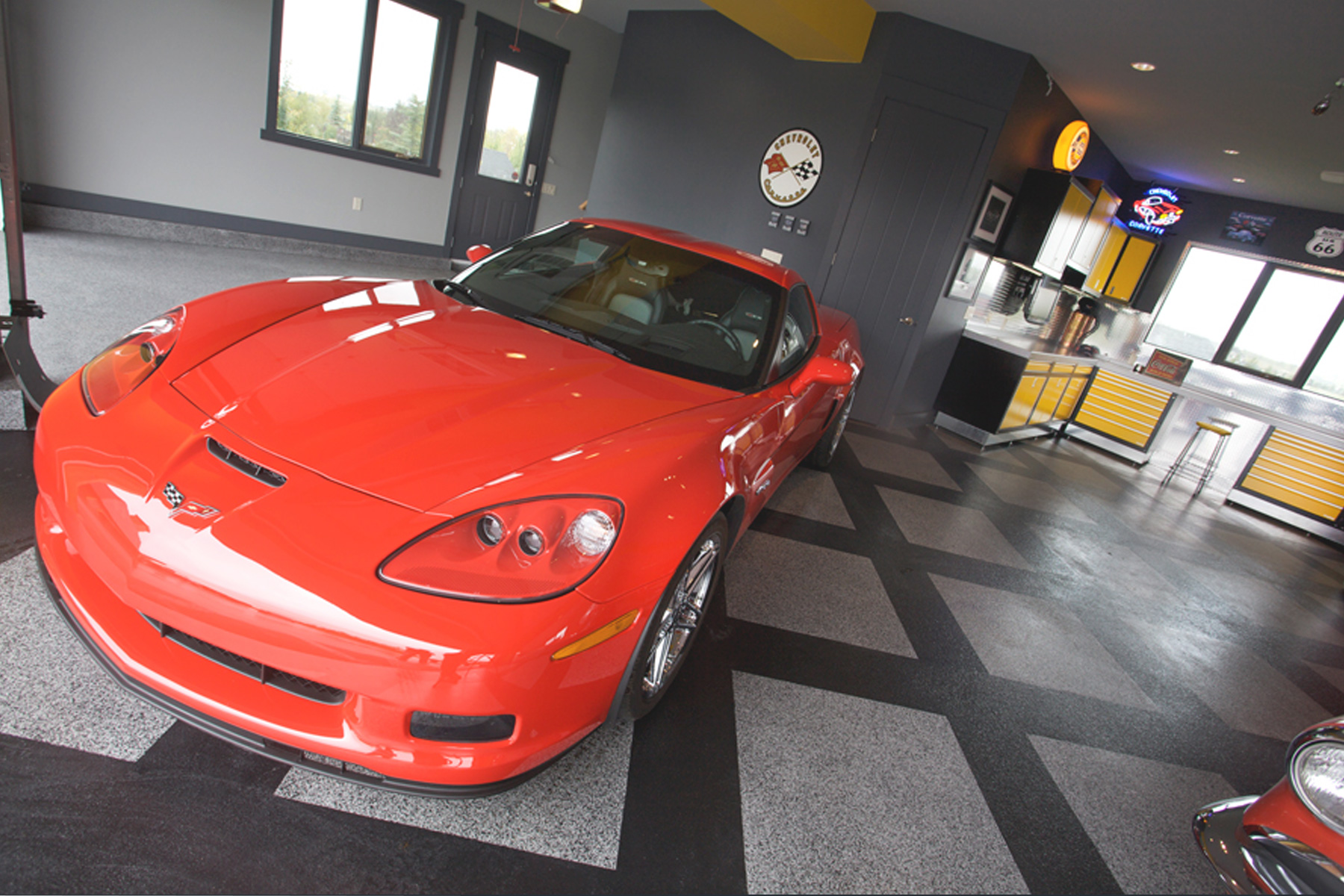
For most Calgary garages, a professionally installed epoxy, polyaspartic, or hybrid coating system is usually the better long-term choice when the main goal is to protect the concrete from vehicles, salt, slush, stains, and daily wear. Interlocking garage floor tiles can still be a good option when you want a modular floor, a quick visual upgrade, or the ability to replace individual sections later.
The best choice depends on the condition of the concrete, how the garage is used, how much winter moisture enters the space, the desired appearance, budget, and whether you want a bonded coating or a removable tile system.
This guide compares garage floor tiles vs epoxy and polyaspartic coatings for Calgary homes. For a broader look at coating systems, read our guide to the best garage floor coating for Calgary homes or view The Garage Store’s garage flooring options in Calgary.
Garage Floor Tiles vs Epoxy: Quick Comparison
| Factor | Epoxy or Polyaspartic Coating | Interlocking Garage Floor Tiles |
|---|---|---|
| How it works | A bonded resin coating is installed directly over prepared concrete. | Tiles lock together over the existing floor without being bonded to the concrete. |
| Concrete protection | Helps seal and protect the concrete surface when properly prepared and installed. | Covers the concrete visually, but water and debris may still reach the slab beneath. |
| Calgary winter performance | Strong option for salt, slush, snowmelt, and daily vehicle use when the system includes suitable texture. | Can work well, but drainage, seams, under-tile debris, and cleaning below the tiles should be considered. |
| Repairs | Damage may require surface preparation and a compatible repair or recoating process. | Individual tiles can often be removed and replaced. |
| Appearance | Seamless finish with chip, quartz, solid-colour, metallic, or other coating options. | Modular pattern with colour combinations, borders, and tile layouts. |
| Installation | Requires surface preparation, coating application, and cure time. | Often faster to place, especially when the slab is being covered rather than restored. |
| Best fit | Homeowners who want a seamless, durable, professionally installed floor coating. | Homeowners who want a modular floor, fast visual improvement, or replaceable sections. |
What Counts as an Epoxy Garage Floor?
Epoxy is a resin coating that bonds to properly prepared concrete. It can create a hard, seamless, low-maintenance surface that improves the look of a garage while helping protect the slab beneath.
In garage flooring conversations, homeowners often use the word epoxy to describe many different coating systems. A floor may be a full epoxy system, a hybrid system with epoxy and polyaspartic layers, or a full polyaspartic system. Those differences matter because cure time, UV stability, flexibility, chemical resistance, texture, and return-to-service time can vary widely.
The Garage Store offers vinyl-chip floor coating systems in epoxy, polyaspartic, hybrid, and solid-colour options. The company also offers solid-colour polyaspartic concrete coatings for spaces where a clean, seamless look is preferred.
Advantages of epoxy and polyaspartic coatings
- Seamless surface with no tile joints or grout lines
- Helps protect concrete from salt, slush, stains, and automotive fluids
- Customizable colour, chip, quartz, metallic, and solid-colour finishes
- Texture can be added for traction
- Easy routine cleaning when maintained properly
- Professional systems can be matched to residential, commercial, and industrial use
Considerations with epoxy and polyaspartic coatings
- The concrete must be properly prepared before coating.
- Cracks, pitting, old coatings, moisture, and contamination need to be assessed.
- Installation conditions and cure windows matter.
- A smooth finish can be slippery when wet if the system is not textured appropriately.
- Repairs are more technical than replacing a loose tile.
For a more specific resin comparison, read epoxy vs polyaspartic garage floor coatings in Calgary.
What Counts as Garage Floor Tile?
Garage floor tile is a broad category. Some products are rigid interlocking tiles designed for vehicles. Others are flexible vinyl or polymer products. Traditional ceramic, stone, or cement tile may look attractive, but they are usually less practical for a working Calgary garage because impact, vehicle weight, water, grout, and temperature changes can create problems.
The Garage Store’s tile options include SwissTrax interlocking floor tiles and Perfection interlocking vinyl floor tiles. These products are designed as non-coating alternatives for homeowners who want a finished surface without committing to a bonded coating system.
Advantages of interlocking garage floor tiles
- Fast visual improvement over stained or worn concrete
- Modular design with colour and pattern options
- Individual tiles can often be replaced if damaged
- Can be a practical option when a bonded coating is not desired
- Some designs allow water to drain through or below the tile surface
- Less permanent than a bonded coating system
Considerations with garage floor tiles
- They do not seal the concrete the way a bonded coating can.
- Water, salt, and debris can collect beneath or between some tile systems.
- Edges, ramps, and transitions need to be planned carefully.
- Heavy point loads can affect some tile products.
- Cleaning may include removing sections or flushing beneath the floor.
- The modular look may not appeal to homeowners who prefer a seamless finish.
How Each Option Handles Calgary Winters
Calgary garages deal with snow, road salt, slush, sand, gravel, and moisture for several months of the year. That is why winter performance should be one of the first things considered when comparing garage floor tiles vs epoxy.
Salt and slush
A seamless epoxy or polyaspartic coating can help keep salt and slush on the surface so they can be rinsed, mopped, or squeegeed away. The coating still needs the right texture and maintenance routine, but it reduces the amount of winter grime that reaches the concrete.
Interlocking tiles can handle winter use, but the tile design matters. Some self-draining tiles intentionally allow water to move through the surface. That can help prevent puddles on top of the tile, but it also means the concrete beneath may need occasional cleaning.
Sand and gravel
Sand and gravel can act like abrasives under tires and boots. Coated floors should be swept or vacuumed regularly so grit does not wear the finish. Tile floors should also be cleaned so grit does not collect in seams, under the tiles, or around transitions.
Freeze-thaw and moisture
A bonded coating does not stop the concrete slab from moving, but it can provide a protective surface when the slab is properly assessed and prepared. Tile systems are not bonded in the same way. That can be useful when a homeowner wants a removable floor, but seams and under-tile moisture need to be managed.
For winter maintenance guidance, see our guide on how to clean and maintain epoxy and polyaspartic garage floors.
Durability: Which Floor Holds Up Better?
Durability depends on the specific coating or tile system, installation quality, slab condition, and how the garage is used. A professional coating system is often the better choice for a daily-use Calgary garage because it is designed to bond to the concrete and protect the surface beneath.
Tile systems can also be durable, especially when the product is designed for garage use. Their strength is repairability. If a tile becomes damaged, individual pieces can often be replaced more easily than repairing a coated area.
The key difference is that coatings protect the slab directly, while tiles cover it. If the concrete is already damaged, wet, oily, or uneven, neither option should be installed without first understanding the underlying issue.
Maintenance: Which Is Easier to Clean?
Both floors can be low-maintenance, but they clean differently.
Cleaning epoxy or polyaspartic coatings
A coated floor is usually cleaned by sweeping or vacuuming grit, rinsing salt residue, using a compatible pH-neutral cleaner when needed, and removing standing water. Because the floor is seamless, there are no tile gaps or grout lines to clean.
Cleaning interlocking garage floor tiles
Tile floors may be swept, vacuumed, rinsed, or mopped depending on the product. Some systems may require occasional cleaning beneath the tiles, especially after winter or in garages where a lot of snowmelt and sand enter the space.
If the garage has floor drains, low spots, or frequent pooling, the cleaning plan matters. The floor should be chosen around where the water goes, not only around how the surface looks.
Installation: Which Option Is Faster?
Interlocking garage tiles can often be installed more quickly than a coating because they do not require the same bonding process. They can also cover an unattractive floor quickly when the homeowner is primarily looking for a visual upgrade.
Coatings usually take longer because the concrete must be prepared. Depending on the condition of the slab, preparation may include grinding, crack repair, removal of old coatings, cleaning, moisture evaluation, and multiple coating layers. Cure time also affects when the garage can return to use.
That extra preparation is part of the value of a professional coating. It addresses the concrete surface rather than simply covering it.
Appearance: Seamless Coating or Modular Tile Pattern?
Appearance is one of the clearest differences between the two options.
Coatings create a seamless surface. Vinyl-chip systems can give the garage a clean, finished look with colour blends that hide dust and light debris. Solid-colour coatings create a more uniform finish. Quartz and metallic options can create a more specialized appearance.
Tiles create a modular pattern. That can look bold and custom, especially with borders, checkerboard designs, or colour-blocked layouts. Tiles may also be appealing if you want the floor to feel more removable or changeable in the future.
Neither look is automatically better. The right choice depends on whether you prefer a permanent seamless finish or a patterned floor made from replaceable sections.
Cost: Which Is Cheaper?
There is no universal winner on cost. Tile pricing and coating pricing both depend on the product selected, square footage, floor condition, preparation needs, finish, accessories, and installation requirements.
Interlocking tiles may reduce some surface-preparation steps, but they are not always the lowest-cost option. A coating may cost more upfront than a basic tile system, especially when repairs and preparation are required, but it may provide stronger concrete protection for daily vehicle use.
The better comparison is total project value, not just material cost. Ask what is included, how long the garage will be out of service, how repairs are handled, how the floor will be maintained, and whether the product fits Calgary winter conditions.
When Garage Floor Tiles Make Sense
Garage floor tiles may be the better choice when:
- You want a modular, removable floor.
- The garage needs a fast visual improvement.
- You like the appearance of tile patterns and colour blocking.
- You want the ability to replace individual sections later.
- You are not ready to commit to a bonded coating.
- The slab condition or project goals make a tile system more practical.
Tiles can be a useful garage flooring option, especially when expectations are realistic and the product is chosen for vehicle use.
When Epoxy or Polyaspartic Coating Makes More Sense
A professional coating system may be the better choice when:
- You want a seamless floor surface.
- You want to protect the concrete from salt, slush, stains, and automotive fluids.
- You want a finish that is easy to mop, rinse, and squeegee.
- You prefer a vinyl-chip, quartz, solid-colour, or metallic coating look.
- The garage sees regular vehicle traffic, tool use, or workshop activity.
- You want the slab assessed, prepared, repaired, and coated as one system.
For many Calgary homeowners, this is the stronger long-term direction. It is especially true when the garage is used daily and the goal is to improve both appearance and performance.
What About Commercial Shops, Parkades, or Warehouses?
Commercial and industrial floors should not be chosen using a simple garage tile versus epoxy checklist. Shops, warehouses, laboratories, parkades, dealerships, and aviation spaces may need systems designed for traffic, impact, chemical exposure, thermal shock, cleaning, drainage, traction, and downtime.
Depending on the environment, the right solution may involve epoxy, polyaspartic, polyurethane, urethane cement, quartz, grind-and-seal, or another professional flooring system. Businesses should review The Garage Store’s industrial and commercial floor coating options before choosing a surface.
Garage Floor Tiles vs Epoxy: Which Is Better?
For most Calgary homeowners who want a durable, seamless, long-term garage floor, a professional epoxy, polyaspartic, or hybrid coating system is usually the better fit. It protects the concrete directly, handles winter grime well when maintained properly, and can be customized with a wide range of finishes and traction levels.
Garage floor tiles are still worth considering when you want a modular, replaceable, and less permanent surface. They can transform the look of a garage quickly, but they should be selected with water, drainage, cleaning, and under-tile maintenance in mind.
The best way to choose is to compare both options against your actual garage. The Garage Store can assess the space, explain the available products, and recommend a system based on how you use it. Request a free on-site consultation and quote.
Frequently Asked Questions
Are garage floor tiles better than epoxy?
Garage floor tiles are not automatically better than epoxy. Tiles are modular and individual sections can often be replaced, while epoxy and polyaspartic coatings create a seamless bonded surface that helps protect the concrete. The better choice depends on the slab, budget, appearance, drainage, and how the garage is used.
What is better for Calgary winters: garage floor tiles or epoxy?
For many Calgary garages, a professional epoxy or polyaspartic coating is the stronger winter option because it helps keep salt, slush, and grime on a seamless surface that can be cleaned away. Tiles can still work, but seams, drainage, and cleaning beneath the tiles need to be considered.
Can water get under interlocking garage floor tiles?
Yes. Depending on the tile design, water may move through seams or drainage channels and reach the concrete beneath. That does not automatically make tiles a bad choice, but the floor beneath may need occasional cleaning and drying, especially after winter.
Are garage floor tiles easier to install than epoxy?
Interlocking garage floor tiles are often faster to install because they do not require the same concrete bonding process. Epoxy and polyaspartic coatings usually require more preparation, including cleaning, profiling, repairs, and cure time.
Can damaged garage floor tiles be replaced?
In many interlocking tile systems, individual tiles can be removed and replaced if damaged. This is one of the main advantages of tile over a bonded coating, where repairs usually require surface preparation and compatible coating materials.
Is polyaspartic better than tile for a garage floor?
Polyaspartic is often the better choice when the goal is a seamless, durable coating with strong UV stability, fast curing, and protection for the concrete surface. Tile may be better when the homeowner wants a modular or less permanent floor with replaceable sections.
Should I choose epoxy, polyaspartic, or garage floor tiles?
Choose based on the concrete condition, winter moisture, desired appearance, installation timeline, budget, and long-term maintenance. A professional assessment can help determine whether a bonded coating or interlocking tile system makes more sense for your garage.